
Archbishop Bagrat Galstanyan Placed Under House Arrest After 344 Days Behind Bars

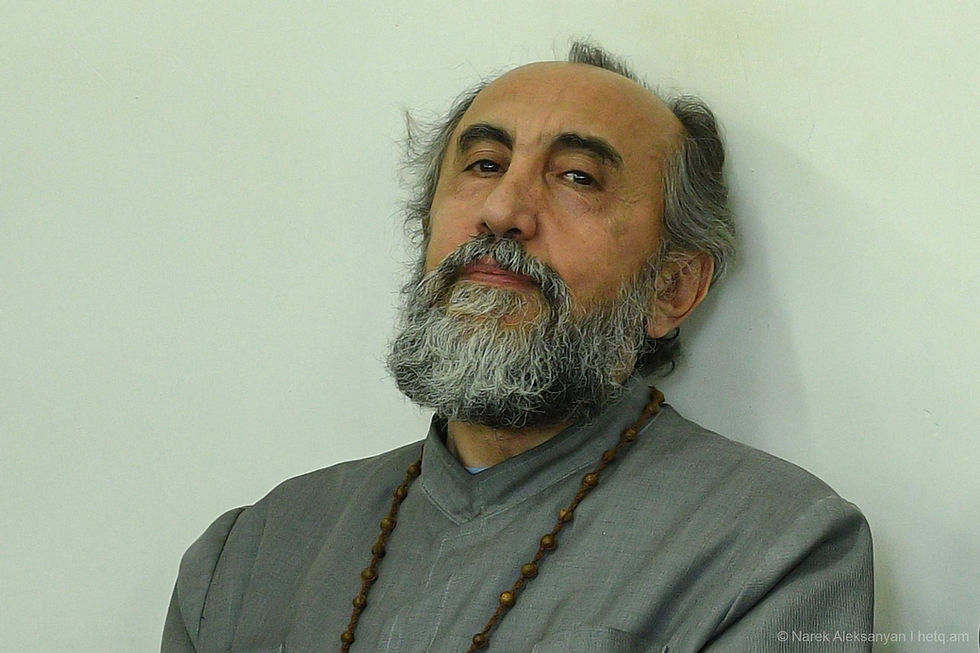
Armenia's Court of Appeal has replaced the pretrial detention of Archbishop Bagrat Galstanyan with house arrest, ending nearly a year of incarceration for one of the country's most prominent religious voices.
Galstanyan, the former head of the Tavush Diocese and leader of the Holy Struggle movement, was transferred to his residence following Thursday's court hearing after spending 344 days in custody.
The archbishop said he does not agree with the court's decision and continues to demand a full acquittal, arguing that he should not be subject to any restrictions.
Armenian authorities accuse Galstanyan of preparing terrorist acts, organizing mass unrest and attempting to seize power. Prosecutors allege that he and his associates developed plans aimed at destabilizing state institutions and forcibly removing the government.
According to Armenia's Investigative Committee, the alleged preparations began in late 2024 after Galstanyan's campaign demanding Prime Minister Nikol Pashinyan's resignation failed to bring about political change. Investigators claim the group planned to organize road blockades, disrupt communications and public services, and create conditions for what authorities describe as a forcible transfer of power.
Galstanyan, his lawyers and supporters have consistently rejected the accusations, describing them as politically motivated and intended to silence a growing opposition movement.
The former bishop emerged as one of the leading critics of Pashinyan's government during the border delimitation process with Azerbaijan. In the spring and summer of 2024, he led large demonstrations in Yerevan demanding the prime minister's resignation, quickly becoming one of the most recognizable figures in Armenia's opposition landscape.
His arrest on June 25, 2025, came during a large-scale law enforcement operation that included more than 90 searches across Armenia. Authorities reported that the raids targeted members of the Holy Struggle movement, the Armenian Revolutionary Federation (Dashnaktsutyun) and other opposition figures.
Officials said investigators discovered firearms, military equipment, communication devices, smoke bombs and documents outlining plans for disruptive activities. Authorities also released audio recordings they said captured discussions among members of the movement regarding their operations.
Defense attorneys disputed those claims and argued that the evidence was either misrepresented or unrelated to Galstanyan. They also maintained that no weapons were found in the archbishop's home and accused authorities of conducting a politically motivated prosecution.
Throughout the past year, courts repeatedly extended Galstanyan's pretrial detention despite numerous appeals filed by his legal team. Detention orders were renewed several times in August and November 2025, as well as in February and April 2026, allowing prosecutors to continue their investigation while keeping the opposition leader behind bars.
The case has become one of the most closely watched political and legal proceedings in Armenia since the 2018 Velvet Revolution, fueling debate over democratic freedoms, judicial independence and the treatment of government critics. Government officials maintain that the case concerns an alleged conspiracy to overthrow the constitutional order through violence, while opposition figures, church representatives and supporters of the Holy Struggle movement argue that the prosecution represents an attempt to neutralize a powerful political challenger.
The criminal proceedings against Galstanyan and more than a dozen co-defendants remain ongoing. While the Court of Appeal's decision ends his nearly year-long detention, the terrorism and coup-related charges against him have not been dropped.
For supporters of the archbishop, the ruling is a significant development after 344 days of pretrial imprisonment. For Armenian authorities, the investigation into what they describe as an organized attempt to seize power continues.
—
Support independent reporting from the region by subscribing to The Armenian Report. Our team is funded solely by readers like you.


.png)
Comments