
Armenia Marks Six Years Since the 44-Day Artsakh War That Killed Thousands of Armenian Soldiers and Civilians

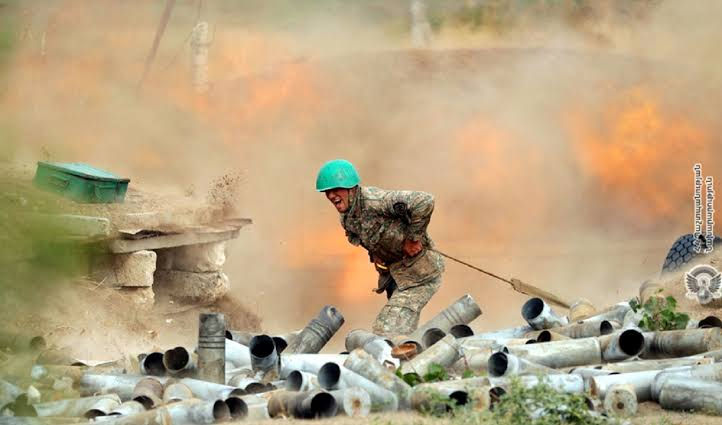
Six years after the 44-day war in Artsakh, thousands of Armenian families are still living with the loss of loved ones who never returned from the battlefield. November 9, the day the fighting ended in 2020, remains one of the most painful dates in Armenia's recent history.
Across Armenia, families are honoring the soldiers killed in the war, many of them young men who had barely begun their adult lives. At Yerablur Military Pantheon in Yerevan, where many of the fallen are buried, their graves stand as a reminder of the human cost of the conflict.
The war began on September 27, 2020, and ended 44 days later with a Russian-brokered ceasefire agreement signed by Armenian Prime Minister Nikol Pashinyan, Azerbaijani President Ilham Aliyev and Russian President Vladimir Putin.

By the time the fighting stopped, thousands of Armenian soldiers had been killed, entire communities had been displaced and Azerbaijan had regained control of large parts of Nagorno-Karabakh and surrounding territories.
Armenian authorities have reported more than 3,800 deaths on the Armenian side, including military personnel and civilians. Nearly 200 people have also been listed as missing, leaving families waiting for answers years after the war.
For those who lost loved ones, November 9 is not simply the anniversary of a military defeat. It marks the day they were forced to confront a future without their sons, husbands, fathers and brothers.
Many of the soldiers killed in the fighting were between 18 and 20 years old. Some were completing their mandatory military service. Others had volunteered or returned to the front lines as reservists.
Their photographs remain on walls in family homes, schools and public spaces across Armenia. Parents continue to visit their graves, while children born shortly before or after the war are growing up without fathers they never had the chance to know.
The consequences of the conflict did not end with the 2020 ceasefire.
In September 2023, Azerbaijan launched another military offensive against Nagorno-Karabakh, taking full control of the region. More than 100,000 ethnic Armenians fled to Armenia in the days that followed, leaving behind homes, churches, schools and the graves of relatives buried in Artsakh.
For families who had already lost someone in the 44-day war, the displacement brought another painful reality: Many could no longer visit the places where their loved ones were buried.
The events of 2023 also deepened concerns over the preservation of Armenian cultural and religious heritage in the region and the future of the displaced population.

Six years after the war, the fate of Armenians held in Azerbaijan remains another unresolved issue. Former Artsakh political and military leaders are among those detained in Baku, while families and human rights advocates continue to call for their release.
The anniversary comes at a time when Armenia and Azerbaijan are pursuing a peace agreement intended to end decades of conflict.
The two countries initialed a peace agreement in Washington on August 8, 2025, but it has not yet been formally signed and ratified. Azerbaijan has continued to demand constitutional changes in Armenia, arguing that the country's Constitution contains territorial claims against Azerbaijan.
While the governments discuss the future of relations between the two countries, the families of those killed in the war continue to seek answers about the missing and the circumstances surrounding the deaths of their loved ones.
For Armenians in the diaspora, the anniversary also carries deep significance. The 2020 war brought Armenian communities around the world together through demonstrations, fundraising campaigns and humanitarian assistance. Six years later, remembrance of the fallen remains closely tied to concerns about the future of Artsakh Armenians.
November 9 has become a day of national mourning and reflection, even as Armenia faces difficult questions about its security and future.
For the parents who lost their children, the passage of time has done little to ease the grief. Birthdays, holidays and family gatherings continue without the people who should have been there.
Six years have passed since the guns fell silent, but the losses remain part of daily life for thousands of Armenian families.
For them, the war is not just a chapter in Armenia's history. It is an empty chair at the dinner table, a photograph on the wall and a grave they will continue to visit for the rest of their lives.
—
Support independent reporting from the region by subscribing to The Armenian Report. Our team is funded solely by readers like you.


Comments