
Armenia’s Declaration of Independence Turns 36 as Pashinyan Pushes New Constitution
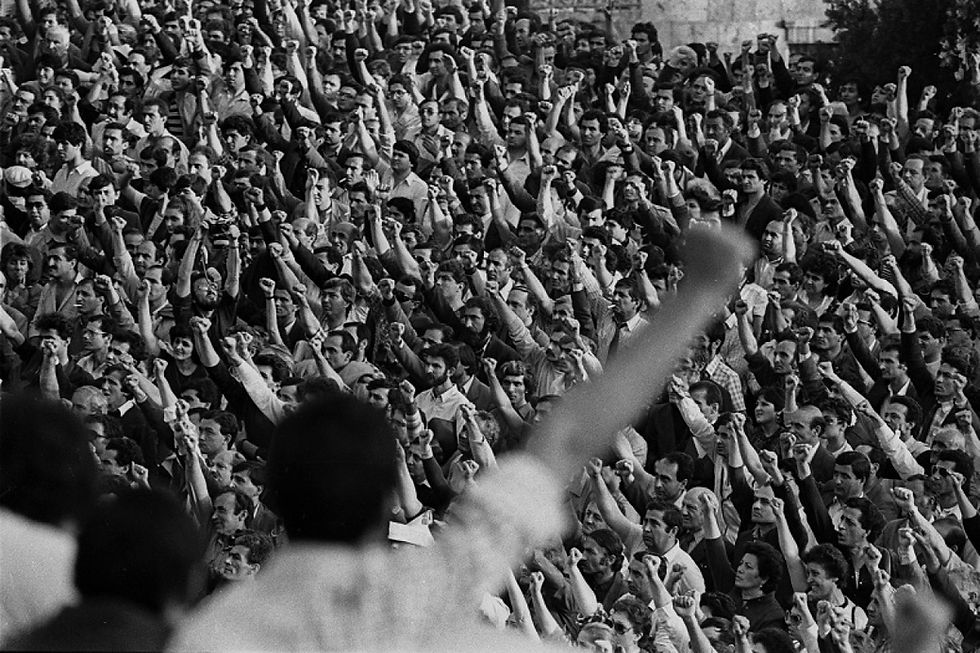
Armenia on Sunday marked 36 years since the adoption of its Declaration of Independence, the document that began the country's formal break from Soviet rule and laid out the foundations of the modern Armenian state.
On Aug. 23, 1990, the Supreme Council of Soviet Armenia adopted the declaration in Yerevan, proclaiming the start of a process toward independent statehood. The vote came more than a year before Armenians overwhelmingly backed independence in a nationwide referendum on Sept. 21, 1991.
The declaration did more than announce Armenia's political direction. It set out the structure of the state its authors intended to build.
The Armenian Soviet Socialist Republic was renamed the Republic of Armenia. The document declared Armenia sovereign, established the supremacy of Armenian law on its territory and recognized the people as the source of state power. It called for Armenia to have its own armed forces, conduct an independent foreign policy and establish national financial, banking, tax and customs systems.
It also guaranteed freedom of speech, the press and conscience, established Armenian as the state language and called for the separation of legislative, executive and judicial powers. The declaration said Armenians living abroad had the right to Armenian citizenship and committed the republic to supporting international recognition of the Armenian Genocide of 1915 in the Ottoman Empire and Western Armenia.

The document deliberately connected the emerging republic to earlier Armenian statehood, citing the democratic traditions of the independent Republic of Armenia established on May 28, 1918. Armenia restored the red, blue and orange tricolor associated with the First Republic as it moved away from Soviet rule.
But another passage in the declaration has taken on new significance 36 years later.
Its preamble refers to the Dec. 1, 1989, joint decision by Soviet Armenia's Supreme Council and the National Council of Nagorno-Karabakh on the reunification of Soviet Armenia and Nagorno-Karabakh.
That language now sits at the center of one of Armenia's most consequential political debates as Prime Minister Nikol Pashinyan pushes for a new Constitution and seeks to redefine the foundations of the post-Soviet Armenian state.
The connection is constitutional as well as historical. The preamble of Armenia's current Constitution says the Armenian people adopted the Constitution based on the fundamental principles of Armenian statehood and national aspirations set out in the Declaration of Independence. The declaration itself states that it would serve as the basis for developing the country's Constitution.
Pashinyan has made the adoption of a new Constitution part of his government's political agenda. In a Constitution Day message in July, he said the governing majority's election platform included adopting a new Constitution and argued that the country's constitutional order must more directly reflect the will of Armenia's citizens.
The debate comes as Pashinyan seeks a broader change in how Armenia defines its national priorities after decades of conflict over Nagorno-Karabakh.
Just three days before the declaration's 36th anniversary, Pashinyan said Armenia was entering what he called the "Fourth Republic." Presenting his government's 2026-2031 program, he described the previous republic as having been founded in the logic of conflict and confrontation and said the new period would be built around peace.
The shift has given the 1990 declaration renewed political relevance. A document written as the Soviet Union was approaching collapse is now part of a debate over what principles should define Armenia in a dramatically different regional environment.
For Armenia in 1990, however, the declaration marked the beginning of a much more immediate transformation.
It asserted the republic's right to its own military, diplomacy, economy and institutions while declaring that sovereignty belonged to its people. It also provided the legal and political framework for the independence referendum that followed the next year.
On Sept. 21, 1991, about 99% of participating voters backed independence. Armenia subsequently declared itself an independent state, and Sept. 21 became the country's Independence Day.
Aug. 23 marks a different moment in that history: the day Armenia formally set the process in motion.
Thirty-six years later, as the government prepares another debate over the country's constitutional future, the declaration remains more than a historical document. The principles written into it continue to shape a fundamental question facing Armenia today — how the state defines itself, its priorities and its place in the region.
—
Support independent reporting from the region by subscribing to The Armenian Report. Our team is funded solely by readers like you.


.png)
Comments