
Gold and Coin From Rome’s First Emperor Found in Ancient Armenian Burial Chamber

Archaeologists in Armenia have uncovered gold jewelry, a Roman coin dating to the reign of Emperor Augustus and a bronze dagger inside an ancient burial chamber that was used for more than a thousand years.
The discoveries were made at Metsamor, one of Armenia’s most important archaeological sites, where excavations have revealed burial layers dating from the Late Bronze Age to the first century A.D.
According to Armenia’s state agency for the protection of historical and cultural heritage, the latest findings came from a stone burial chamber on privately owned land next to the Metsamor Historical-Archaeological Museum-Reserve. Excavations began two years ago and continued through 2026.
The chamber, built from volcanic tuff and basalt, sits within a circular stone structure approximately 20 meters (66 feet) across. At its center is a large tomb measuring about 6 by 4 meters (20 by 13 feet).
Previous excavations uncovered a first-century burial containing gold ornaments, a coin from the reign of Augustus, Rome’s first emperor, and other objects associated with the Classical period.
This year, archaeologists reached deeper layers of the chamber, revealing a separate Iron Age burial containing human remains, pottery and other grave goods.
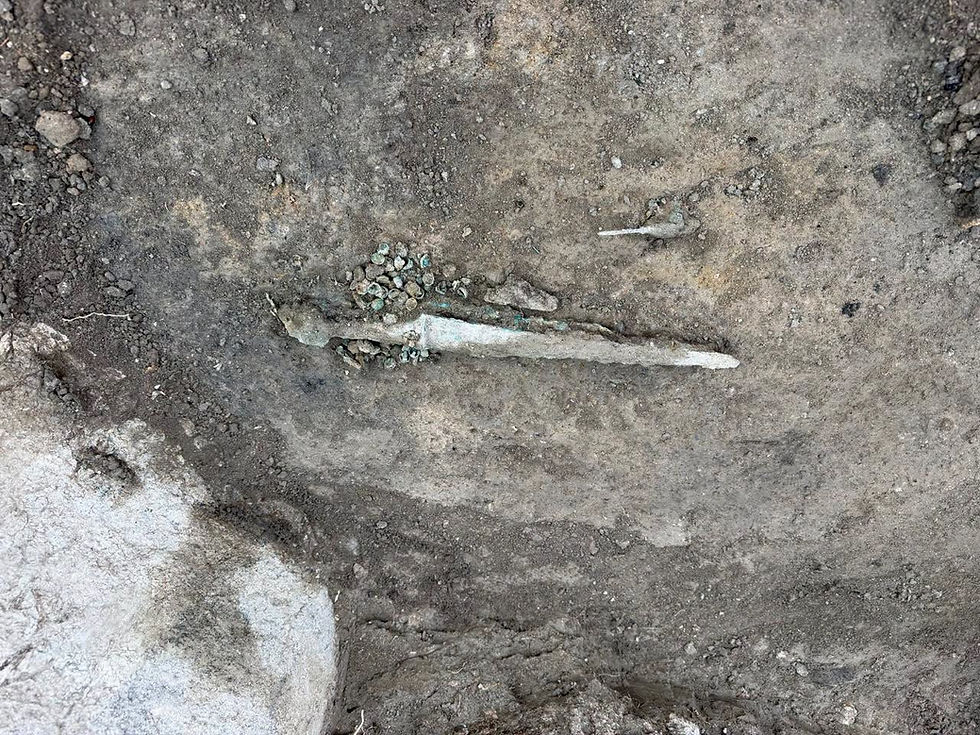
Near the chamber floor, researchers discovered an even older burial dating to the 14th or 13th century B.C., during the Late Bronze Age.
Among the objects recovered were a bronze dagger of the Lchashen type, fragments of bronze belts, bell-shaped pendants and large quantities of pottery. Archaeologists also found a substantial collection of horse bones.

The different burial layers suggest that the chamber remained an important burial place across generations, with communities returning to the site centuries after its original construction.
Metsamor, located in Armenia’s Armavir province, is known for its Bronze and Iron Age settlements, burial grounds and evidence of ancient metalworking. The site offers valuable insight into the communities that inhabited the Armenian Highlands long before the rise of the region’s later kingdoms.
The latest discoveries add to that history, showing how a single burial site continued to be used through major changes in the region’s cultures and civilizations.
—
Support independent reporting from the region by subscribing to The Armenian Report. Our team is funded solely by readers like you.


Comments