
Jerusalem’s Armenian Quarter Records More Harassment on One Street in Three Months Than Entire Quarter Last Year
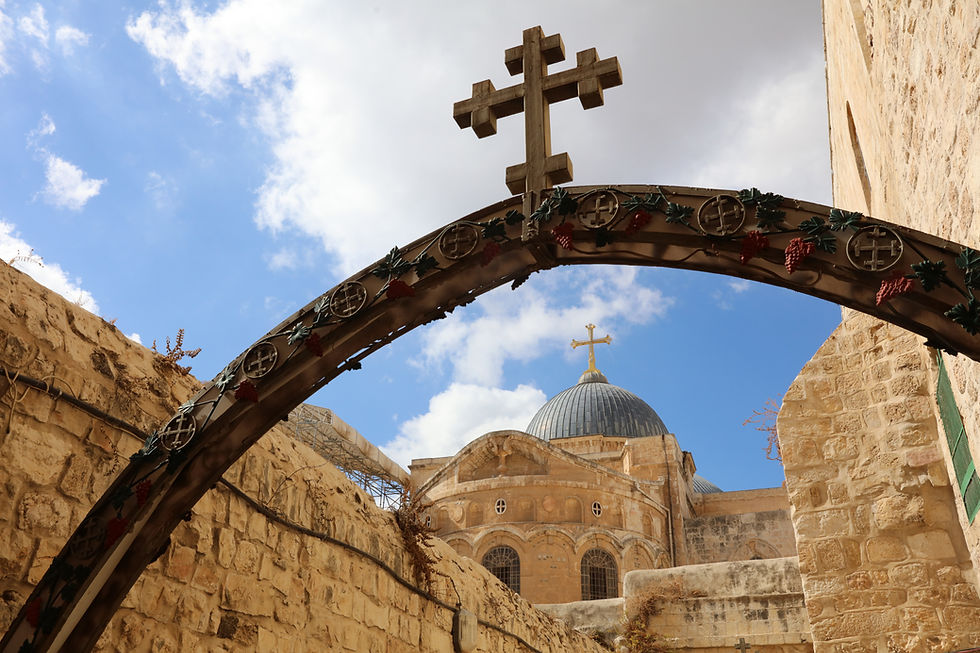
Anti-Christian harassment in Jerusalem’s Armenian Quarter has surpassed the total recorded throughout 2025, with 45 incidents documented on a single street between July and September 2026, according to a new report by an Israeli religious freedom watchdog.
The Religious Freedom Data Center (RFDC) recorded 77 incidents across Jerusalem’s Old City during the third quarter of 2026. Of those, 45 occurred on Armenian Patriarchate Street, accounting for 58% of all documented incidents in the area.
The figures are particularly concerning when compared with the organization's 2025 annual report, which documented 43 incidents across the entire Armenian Quarter over 12 months. The latest quarterly count exceeds that annual figure by two incidents, even though it covers just three months and a single street.
While the reporting periods and geographic boundaries differ, the findings show that the number of documented incidents on Armenian Patriarchate Street during the latest quarter alone has already exceeded last year's total for the wider Armenian Quarter.
The reported harassment includes spitting, verbal threats, physical assaults, objects thrown at Christians and vandalism targeting religious signs and property.
Among the most serious incidents was an attack on a 9-year-old Armenian boy in September. The child, identified as William, was pepper-sprayed near the Mamilla area, outside Jerusalem’s Old City, during the Jewish holiday of Yom Kippur.
Israeli police arrested a 22-year-old man from Ganei Modi'in in connection with the attack.
The incident followed another confrontation in August, when Israeli police arrested six people, including five minors, after a group was filmed spitting near the entrance to St. James Monastery in the Armenian Quarter.
The RFDC's findings also raise concerns about how Israeli authorities have handled complaints involving harassment of Christians.
During the third quarter of 2026, 35 police complaints were filed, compared with 12 cases opened during the previous quarter. Ten of those earlier cases were subsequently closed.
According to the watchdog, most of the latest complaints were supported by photographs or video recordings documenting the incidents and, in many cases, identifying suspects.

Despite the repeated harassment, the organization said the Armenian community had received no specific protection measures or coordinated response from authorities.
The report identified Armenian Patriarchate Street as a particularly vulnerable location because of the large number of people passing through the neighborhood on their way to the Western Wall, one of Judaism's holiest sites.
"Thousands of people walk through its streets on their way to the Western Wall, and it has the highest number of documented incidents of harassment," the report stated.
"Regrettably, the [Armenian] community has received no specific attention, response, or action plan to put an end to its suffering."
The Armenian community has maintained a continuous presence in Jerusalem since the fourth century. Its historic neighborhood is one of the four traditional quarters of the Old City, alongside the Christian, Jewish and Muslim quarters.
Today, approximately 2,000 Armenians live in Jerusalem, a population that has declined significantly since 1948.
The RFDC's 2025 annual report documented 181 incidents of harassment against Christians, Christian symbols and religious institutions across Israel. Of those, 150 occurred in Jerusalem, with the Armenian Quarter recording the highest number for any individual location in the city.
The organization, established in 2023 by Israeli activist and interfaith scholar Yisca Harani, monitors attacks and harassment targeting Christians in Israel.
Its latest findings point to the continued vulnerability of Jerusalem's Armenian community, where incidents documented during a single quarter have already exceeded the total recorded across the neighborhood throughout the previous year.
—
Support independent reporting from the region by subscribing to The Armenian Report. Our team is funded solely by readers like you.


.png)
Comments