
24 Armenians Who Saved Jews During the Holocaust Honored in Jerusalem

Twenty-four Armenians who saved Jewish lives during the Holocaust were honored this week in Jerusalem, as Israel marked Yom HaShoah. Their stories were brought to life through a special exhibition recognizing them as Yad Vashem’s “Righteous Among the Nations”—a title given to non-Jews who risked their lives to rescue Jews during the Holocaust.
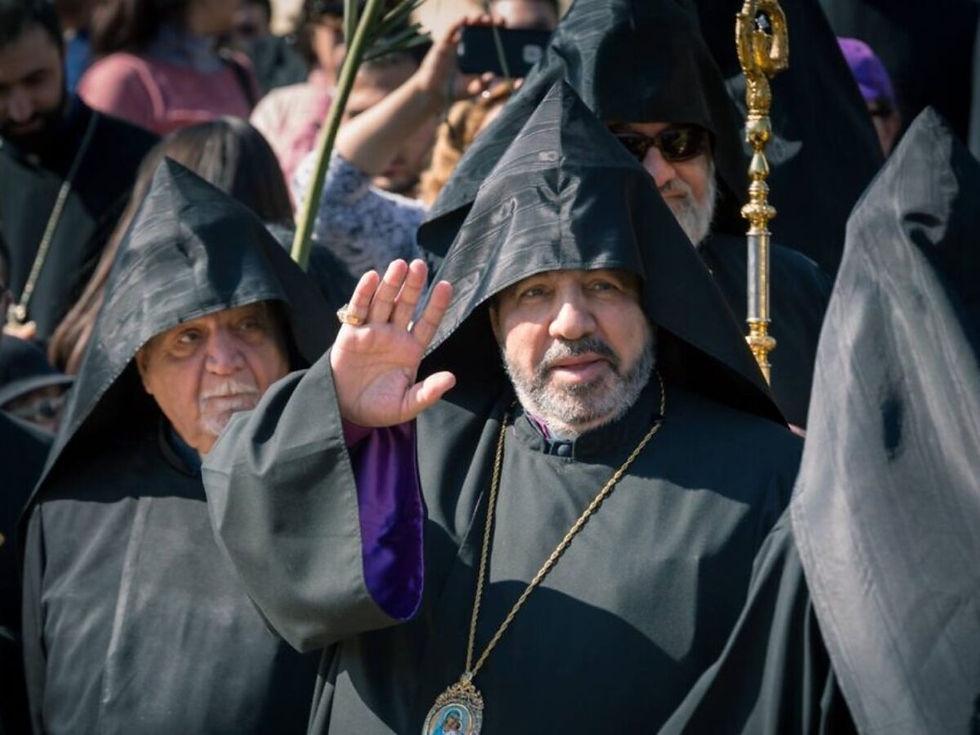
The exhibition opened in the Armenian Quarter of Jerusalem’s Old City, at the Clergy Seminary Hall, drawing hundreds of visitors from across religious and cultural communities. Through photographs, archival documents, and personal testimonies, it told the stories of Armenian men and women who carried out acts of courage across Europe—including in Ukraine, Crimea, Austria, Hungary, and France.
Many of those honored shared a painful history of their own. Several were survivors of the 1915 Armenian Genocide, yet chose to risk everything to save others facing persecution. Their actions showed a powerful sense of solidarity shaped by lived experience.
The initiative was led by Yisca Harani, director of the Religious Freedom Data Center, in cooperation with the Armenian Patriarchate of Jerusalem and the local Armenian community. Among those in attendance were diplomats, religious leaders, students, and public officials, including Joel Lion and Jerusalem City Council member Yeela Bitton de Lange.
Organizers said the exhibition also reflects the deep historical ties between Armenians and Jews. Armenia has one of the highest numbers of individuals recognized as Righteous Among the Nations among countries where the Holocaust did not take place. Many of those honored had already endured the trauma of genocide themselves.
The exhibition also explored broader historical connections. Figures like Henry Morgenthau Sr. helped raise global awareness about the Armenian Genocide, while Franz Werfel brought international attention through literature. The concept of genocide itself was later defined by Raphael Lemkin, partly influenced by the Armenian case.
Several rescue stories stood out. Ashkhen Agopian, recognized in 2010 along with her daughters, helped hide and support a Jewish family during the Nazi occupation of Odessa. Her young daughter risked her own life by delivering food and clothing to those in hiding.
Another story highlighted the courage of Grigori Tashjian and Fran Tashjian, who sheltered Jewish children for years in Crimea. They repeatedly moved them between hiding places to avoid detection, protecting them throughout the occupation despite constant danger.
The exhibition also touched on Armenian involvement in resistance efforts in Europe, including the group led by Missak Manouchian, which united fighters from different backgrounds against Nazi forces.
At the same time, organizers acknowledged that political tensions remain. Israel has not officially recognized the Armenian Genocide, and concerns persist over Israeli weapons sales to Azerbaijan, which Armenians say were used during the recent war and occupation in Nagorno-Karabakh.
Still, the focus of the exhibition remained on shared humanity. Organizers described it as both a tribute and a reminder—highlighting how, even in the darkest times, individuals chose to act with courage and compassion.
Plans are now underway to expand the exhibition to other cities across Israel, including Jaffa and Haifa, in partnership with local Armenian communities.
—
Support independent reporting from the region by subscribing to The Armenian Report. Our team is funded solely by readers like you.


.png)
https://s666.fit/ hôm bữa mình lướt thử vì thấy bạn bè nhắc, kiểu vào xem giao diện ra sao thôi. Trang load khá nhanh, nhìn tổng thể không bị “dội” chữ, các khối nội dung chia ra rõ nên kéo xuống dễ theo dõi. Mình thấy họ có nhắc giấy phép PAGCOR ngay phần giới thiệu, đọc lướt qua cũng đỡ lăn tăn hơn một chút. Menu đặt ngay chỗ dễ nhìn nên chuyển qua lại không phải tìm, tiêu đề từng mục làm nổi nên biết mình đang ở đoạn nào. Nói chung cảm giác dùng ổn, đặc biệt là cách họ chia box thông tin và đặt heading theo cụm ngay trên trang.
HD88 dạo này thấy mọi người nói nhiều nên mình cũng ghé thử cho biết, kiểu vào lướt vài phút thôi chứ chưa có làm gì sâu. Cảm giác đầu tiên là trang nhìn khá sáng sủa, bố cục gọn nên không bị “ngợp” như mấy chỗ hay nhồi chữ. Mình thích nhất là cái menu để khá dễ thấy, bấm qua lại mượt và không phải đoán xem nút nằm đâu. Thông tin trên trang cũng chia thành từng khối rõ ràng, nhìn phát là biết phần nào ra phần đó, đọc lướt vẫn theo kịp. Nói chung mình chỉ cần kéo nhẹ là nắm được cách họ sắp xếp nội dung, nhất là mấy khung thông tin xếp…
luck8 mình thấy bạn bè nhắc hoài nên cũng bấm vào coi thử cho biết chứ chưa có làm gì nhiều. Vào cái là thấy trang load khá lẹ, lướt trên điện thoại cũng ổn, không bị giật lag khó chịu. Mình chỉ xem qua cách họ trình bày thôi, thấy chia nội dung theo từng khối rõ ràng nên nhìn phát là biết đang ở mục nào, không kiểu nhồi chữ rối mắt. Với lại trên thanh địa chỉ có biểu tượng ổ khóa SSL nên ít nhất cảm giác an tâm hơn khi chỉ ghé xem thử. Nói chung giao diện nhìn gọn gàng, chữ nghĩa dễ đọc và các khung nội dung sắp xếp khá sạch sẽ,…
https://onbetv2.com/ mình thấy bạn bè nhắc mấy lần nên tò mò bấm vào coi thử thôi, chứ chưa đăng ký hay nạp gì. Lướt qua phần giới thiệu thấy họ trình bày khá gọn, kiểu chia từng khối nội dung nên đọc nhanh, không bị rối mắt. Có đoạn nhắc giấy phép PAGCOR từ 2016, mình để ý họ ghi theo dạng tóm tắt, nhìn là hiểu ý chứ không kéo dài lê thê. Mấy mục phía dưới cũng ngắt đoạn hợp lý, kéo xuống là bắt được thông tin chính liền. Nói chung cảm giác site làm khá “sạch”, chữ dễ đọc, không bị nhồi quá nhiều thứ lên một màn hình. Mình thích nhất là tiêu đề và…
fly88 dạo này mình thấy nhiều người nhắc nên cũng bấm vào xem thử cho biết. Mình không có ngồi soi kỹ từng trò hay gì đâu, chỉ lướt vài phút xem trang sắp xếp có dễ nhìn không. Cảm giác đầu tiên là bố cục khá thoáng, chia khối rõ ràng nên kéo xuống không bị rối mắt. Mình có thấy một bài kiểu “cập nhật link mới nhất 2026” nằm ngay phần nội dung chính, tiêu đề to nên đọc lướt cũng nắm được họ đang nói gì. Thanh menu đặt chỗ dễ thấy, chuyển qua lại giữa mấy mục cũng ổn, không bị giật lag. Nói chung nhìn như họ chăm chút phần trình bày, nhất là…