
Aliyev Regime Erases Historic Moscow and Kars Treaties From Nakhijevan Constitution
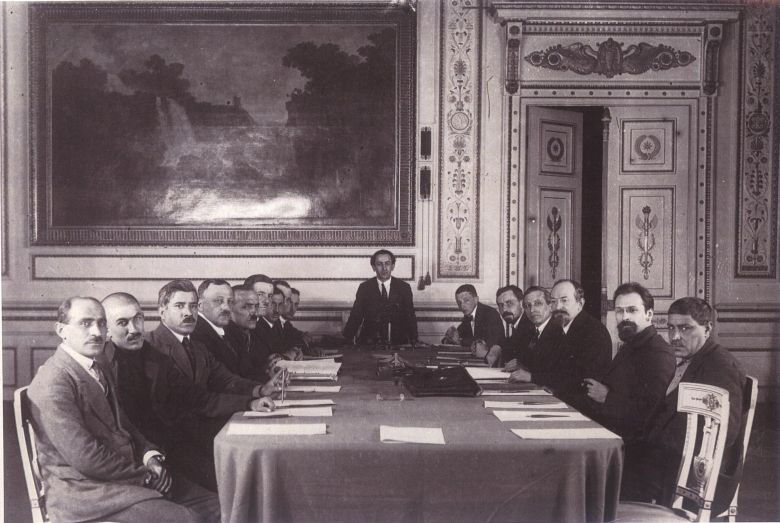
Azerbaijan has removed references to the Moscow and Kars treaties from the constitution of its Nakhijevan exclave, a move that has drawn close attention from regional analysts and Armenian media outlets.
Former lawmaker and regional analyst Tatevik Hayrapetyan spoke to The Armenian Report about the decision taken by Azerbaijan’s parliament, the Milli Mejlis. She said, “Today, by a decision of the Milli Mejlis of Azerbaijan, the provision referring to the Moscow Treaties of March 16, 1921, and the Kars Treaties of October 13, 1921, has been removed from the Constitution of the Nakhijevan Autonomous Republic (NAR). Back in June of last year, a draft amendment to the NAR Constitution was submitted to the Milli Mejlis for consideration. In my view, the essential amendment is the removal of the words: ‘International Treaties of Moscow of March 16, 1921, and International Treaties of Kars of October 13, 1921’ from Part II of Article 1.”
The specific change means that Part II of Article 1 of the Nakhijevan Autonomous Republic’s constitution no longer contains the wording that directly mentions those two international treaties. Those articles had previously linked the region’s legal foundation to the 1921 Moscow and Kars agreements, which shaped borders and status in the South Caucasus after the collapse of the Russian Empire and during the early Soviet period.

Hayrapetyan argued that this amendment is part of a broader policy aimed at weakening Nakhijevan’s autonomous status. She said,
“Through this and other proposed changes, Aliyev is eliminating all attributes of autonomy, replacing local elections with direct appointments from Baku. In effect, he is de facto abolishing the autonomous status of the NAR, removing references to the Kars and Moscow treaties on the basis of which the NAR was originally established. De jure, the autonomy still exists, as it can only be abolished through a referendum by amending the Constitution of Azerbaijan.”
She added that she had warned about such steps in late 2022, linking them to wider regional issues:
“I predicted that Aliyev would move toward abolishing the autonomy of the NAR back in November 2022, linking it also to Artsakh. The Azerbaijani leader appears determined to ensure that no ‘autonomy’ status will be discussed in the future.”
Hayrapetyan also stressed that while practical changes may already be underway, the legal status of autonomy remains in place for now:
“Aliyev has been implementing the de facto abolition of the NAR’s autonomous status for some time. It should also be noted that the autonomy can be formally abolished de jure through a referendum by amending the Constitution of Azerbaijan—a step Azerbaijan may take at some point in the future.”
Reports from Azerbaijani media confirmed that the changes were formally approved. According to the APA news agency, amendments were made to the preamble of the Nakhijevan constitution so that the Moscow and Kars treaties are no longer mentioned. APA explained:
“The Preamble of the Constitution of the Nakhijevan Autonomous Republic is being amended, and the names of the Moscow and Kars treaties are being removed from the Nakhchivan Constitution. This is reflected in the draft Constitutional Law of the Republic of Azerbaijan ‘On the Approval of Amendments to the Constitution of the Nakhijevan Autonomous Republic.’”

The agency also recalled what had previously been written in the document:
“The Preamble to the Constitution of the Nakhijevan Autonomous Republic currently in force states that the foundations of Nakhijevan’s autonomy were laid by the Moscow international treaties of March 16, 1921, and the Kars international treaties of October 13, 1921, which are currently in force,” APA added.
It further described how those treaties had defined the region’s political development over the past century:
“These international treaties reaffirm Nakhijevan’s status as an integral part of Azerbaijan and define its territorial boundaries. Starting from March 16, 1921, Nakhijevan was first designated as the Nakhijevan Soviet Socialist Republic; after June 16, 1923, the Nakhijevan Region; from February 9, 1924, the Nakhijevan Autonomous Soviet Socialist Republic; and from November 17, 1990, the Nakhijevan Autonomous Republic. In 1926, the first Constitution of the Nakhijevan Autonomous Soviet Socialist Republic was adopted, followed by the second in 1937 and the third in 1978. This Constitution of the Nakhijevan Autonomous Republic is based on the Constitution of the Republic of Azerbaijan, adopted by nationwide vote (referendum) on November 12, 1995. (...). Following the discussions, the draft law was adopted [in the Azerbaijani parliament] in the second reading,” APA concludes.
In addition to reporting on the constitutional change, the same declaration noted that Azerbaijan claims almost the entire territory of Armenia.
The removal of the Moscow and Kars treaty references from Nakhijevan’s constitution is likely to be closely watched across the region. For many observers, those treaties have long been central to the legal and historical framework governing borders and autonomy in the South Caucasus. The latest decision, and the debate around it, adds another layer to already tense political relations in the area and raises questions about how Nakhijevan’s status may evolve in the future.
—
Support independent reporting from the region by subscribing to The Armenian Report. Our team is funded solely by readers like you.


.png)
Comments