
Armenian POWs Reportedly Suffer Fractures, Abuse and Rapid Health Decline in Azerbaijani Custody
- 2 hours ago
- 3 min read
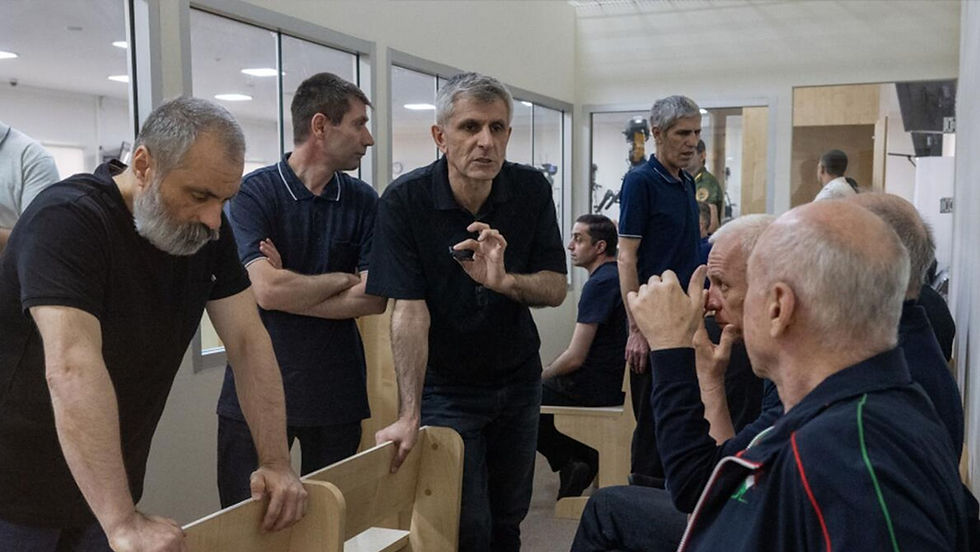
INTERVIEW: Fresh reports from the families of Armenian hostages held in Azerbaijan suggest several detainees may have suffered serious injuries, including fractures, while others are facing a rapid decline in their health, raising new fears over their safety after years in Azerbaijani custody.
Siranush Sahakyan, president of the International and Comparative Law Center and legal representative of Armenian prisoners before the European Court of Human Rights (ECHR), told The Armenian Report that her team has received multiple alarming reports from relatives. Although independent verification remains impossible because international organizations have been denied direct access to the prisoners, she said there is no reason to dismiss the information.
"We have received reports of serious injuries," Sahakyan said. "If the information we have received is accurate, some of the prisoners' conditions could even be incompatible with life."

According to Sahakyan, families have described a sharp deterioration in the prisoners' health. While some reports involve worsening pre-existing medical conditions, others point to injuries that could have resulted from physical violence.
Among the reported injuries are fractures.
"We cannot determine exactly how these injuries occurred," Sahakyan said. "However, we cannot rule out the possibility that they were caused by violence or outside intervention."
Relatives say the prisoners, many of whom have spent years in Azerbaijani detention without access to comprehensive medical care, continue to grow weaker. Their concerns have been reinforced by the limited courtroom footage released by Azerbaijani media, which they say shows men who once appeared healthy now looking severely emaciated.
One relative described a prisoner as "skin and bones" and said several of his lower teeth appeared to be missing during recent court hearings. Another family member said prisoners have reported widespread health problems, including heart complications and persistent headaches.
The latest warnings come only days after the wife of Armenian hostage Lyudvig Mkrtchyan, who has been imprisoned in Azerbaijan for nearly six years, publicly said her husband's health had sharply deteriorated in recent months.
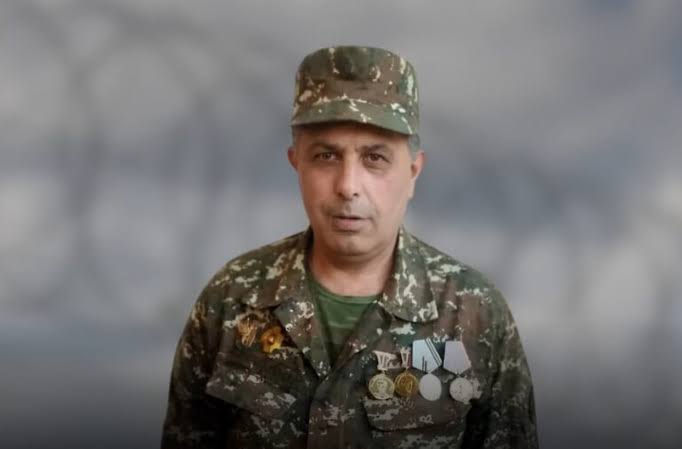
Sahakyan said the absence of independent monitoring makes it impossible to establish the prisoners' true medical condition. International organizations have not been permitted to send independent physicians to examine the detainees, leaving families as the primary source of information.
Her legal team is documenting every report received and forwarding the information to international institutions, urging them to intervene directly or raise the issue through diplomatic channels.
Speaking to The Armenian Report, Sahakyan said reports of abuse should not be viewed as isolated incidents.
"Cases of violence have occurred, and they are systemic in nature," she said. "The U.N. Committee Against Torture has concluded that torture in Azerbaijan is endemic, systemic and systematic. Under such conditions, no special pretext is needed to torture people held in closed institutions."
She added that psychological abuse is also widespread and that individual acts of punishment have been documented. However, she said there is no clear pattern explaining when such abuse occurs.
The Armenian Report also asked whether the reported violence could be linked to audio messages some prisoners have periodically managed to send to their families.
"I can neither confirm nor rule out that possibility," Sahakyan said. "It is possible, but I have no specific information connecting the mistreatment directly to those recordings."
Asked what would happen if an Armenian prisoner died after suffering torture or abuse in custody, Sahakyan said international law places the burden on Azerbaijan to prove it was not responsible.
"When a person dies in a closed institution, there is a presumption of state responsibility unless the authorities can prove beyond a reasonable doubt that the death was not caused by injuries or torture," she said. "If a prisoner is killed, it constitutes a war crime."
International scrutiny of the prisoners' treatment is expected to increase in the coming weeks. By Aug. 31, Azerbaijan must submit information to the European Court of Human Rights detailing the conditions of detention and medical status of the Armenian prisoners. Sahakyan said those records will be carefully compared with the information collected from their families.

Although the ECHR cannot compel Azerbaijan to admit independent doctors, it has ordered the country to safeguard the prisoners' health and physical integrity and to refrain from any actions that could endanger their lives.
The renewed concerns come as international pressure on Baku continues to grow. Earlier this week, the U.S. House Foreign Affairs Committee approved a measure calling for the immediate and unconditional release of all Armenian hostages held by Azerbaijan.
According to Armenian officials and the prisoners' legal representatives, 19 Armenian hostages remain imprisoned in Azerbaijan, including former Artsakh political leaders, military personnel and civilians captured during and after the conflict over Nagorno-Karabakh.
—
Support independent reporting from the region by subscribing to The Armenian Report. Our team is funded solely by readers like you.


.png)


Comments