
Armenian Scientist Behind Historic Discovery Confirming Einstein’s Theory of Relativity
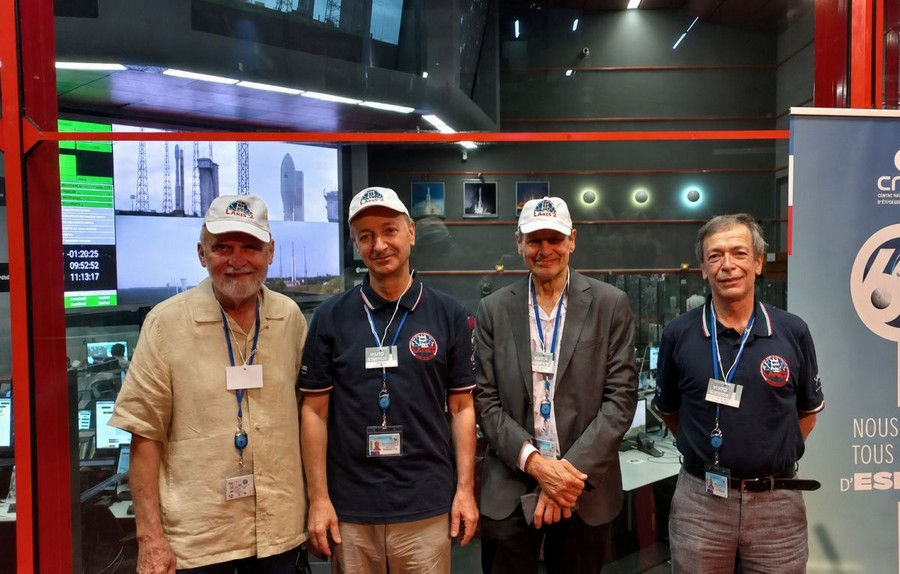
An Armenian astrophysicist is among the international scientists behind a landmark study that has produced the most precise confirmation yet of one of Albert Einstein's central predictions about how the universe works.
The research, published in the latest issue of Nature, measured the elusive frame-dragging effect with unprecedented accuracy. First predicted by Einstein's general theory of relativity, the phenomenon occurs when a massive rotating object such as Earth subtly twists the fabric of spacetime as it spins.
Professor Vahagn Gurzadyan, head of the Center for Cosmology and Astrophysics at the A.I. Alikhanyan National Science Laboratory, also known as the Yerevan Physics Institute, is a co-author of the study. The institute is part of the international LARES mission, which brings together researchers from the Italian Space Agency, the European Space Agency and several leading scientific institutions.
The team relied on observations from the LARES-2 satellite, launched in 2022, along with data from the earlier LAGEOS and GRACE satellites. Thanks to LARES-2's carefully designed orbit and engineering, scientists measured Earth's frame-dragging effect with a relative uncertainty of just one part in a thousand, improving the accuracy of previous measurements by roughly a factor of 10.

The results provide one of the strongest real-world confirmations of Einstein's theory of general relativity ever achieved near Earth. They also narrow the range of alternative theories of gravity, including models that predict small departures from Einstein's calculations.
The research could also improve scientists' understanding of Earth itself. By combining data from the LARES-2 and LAGEOS satellites, researchers can measure Earth's gravitational field and lunisolar tides more precisely, providing valuable information for geophysics and Earth science.
The findings have attracted widespread international attention. Scientific American described the measurements as among the most accurate ever made of the frame-dragging effect in an article titled, "The Earth Is Dragging Spacetime Around Its Orbit, Just as Einstein Predicted." The study has also been featured by Ars Technica, Italy's Rai Radio 3 and MeteoWeb, Russia's TASS news agency and other international media outlets.
The publication adds to Gurzadyan's growing list of internationally recognized scientific contributions. In 2025, he co-authored a study published in Nature Partner Journals – Heritage Science that explored Armenia's ancient vishapakars, or dragon stones. Conducted with archaeologist Arsen Bobokhyan, that research also drew broad international media coverage.
—
Support independent reporting from the region by subscribing to The Armenian Report. Our team is funded solely by readers like you.


.png)
Comments