
‘Imprisoned, but Not on Our Knees’: POW Davit Babayan Speaks From Azerbaijani Custody

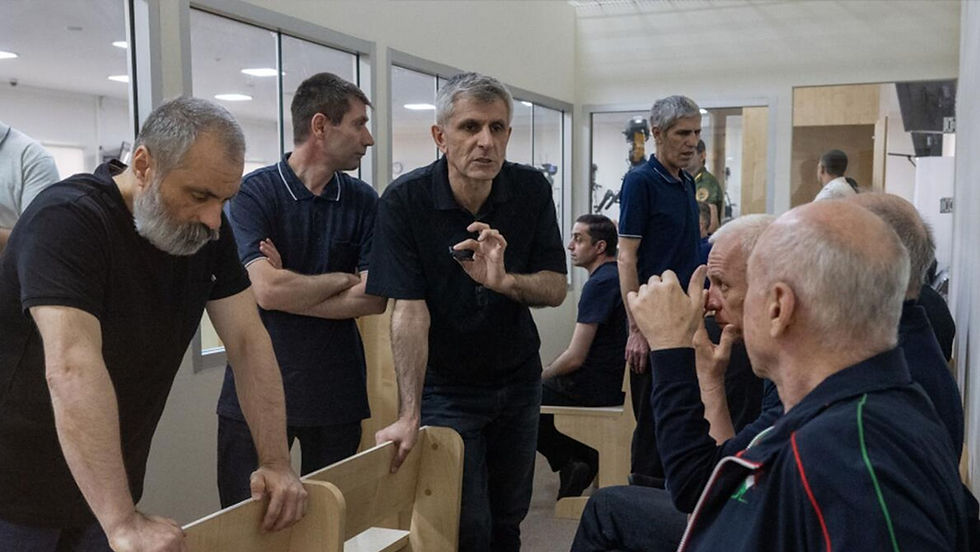
Former Artsakh Foreign Minister Davit Babayan has accused Azerbaijan’s courts of staging a predetermined legal process against him and other imprisoned Armenian officials, saying the record of the proceedings will now form part of their case before international courts.
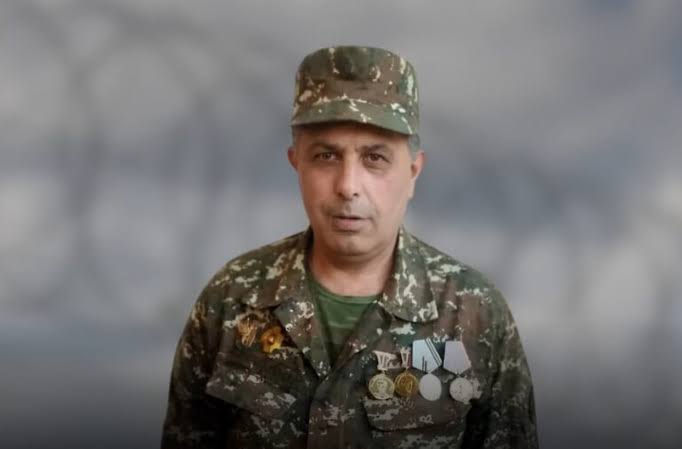
Babayan made the allegations in a message sent from Azerbaijani custody through his family and provided to News.am. His remarks came after an appeals court upheld the verdicts against him and other former Artsakh officials.
“What kind of trial was this? It was theater, with a script written in advance,” Babayan said.
Babayan, who served as foreign minister of the Republic of Artsakh, surrendered to Azerbaijani authorities in September 2023, shortly after Azerbaijan’s military offensive brought the region under Baku’s control and forced its indigenous Armenian population to flee.
In his latest message, Babayan said he viewed the appeal as a procedural step that had to be completed before the case could be brought before an international court.
“This was purely a formal stage that we had to go through so that we could later use it when applying to an international court,” he said.
Babayan described a series of problems he said occurred during both the original trial and the appeal. He claimed the court repeatedly sided with prosecutors, interrupted defense statements and failed to accurately record arguments made by the defendants.
He said all defense motions considered during the appeal were decided in favor of the prosecution. During the first trial, he said, that figure was 99.4%.
Babayan also said two charges carrying life sentences appeared in written documents he received after the trial even though, according to him, they had not been raised during the proceedings.
As one example, Babayan pointed to an accusation that he had sought to overthrow Azerbaijan’s government and constitutional order. He said he asked prosecutors to produce evidence that he had participated in a political effort to seize power inside Azerbaijan.
“Of course, there is no answer,” he said.
Babayan also questioned the handling of his legal representation, saying five or six defense attorneys had been replaced during the proceedings. One lawyer was changed around the start of the appeal, he said. When Babayan was told the attorney had health problems, he requested a video call to speak with the lawyer directly but said the request was denied.
He further accused the court of keeping incomplete or distorted records of statements made by the defense.
“What we said was not included at all or, at best, was included in a heavily shortened or distorted form,” Babayan said. He characterized the treatment of the defendants as “legal apartheid.”
Babayan said one of his defense attorneys had stated that more than 95% of the accusations were fabricated and lacked evidence.
He also drew a contrast between the appeal and the original proceedings, where he said 200 to 300 members of the public regularly attended hearings. According to Babayan, those spectators were selectively brought to court by bus, and he alleged that some were paid to attend. He said no members of the public were present during the appeal.

Babayan also raised concerns about the health of Armenian prisoners in Azerbaijan. He said he has health problems of his own and asked the court to place them on the official record. Several other prisoners are dealing with serious health issues, he said.
“I am not the only one with health problems,” Babayan said. “A number of our friends have truly serious health problems.”
Still, he said imprisonment had not broken their resolve.
“It is one thing to fight for justice and another thing to be imprisoned for it,” Babayan said. “But know this: although we are imprisoned, we are not on our knees. Let everyone know that.”
He ended his message by urging Armenians and others following the cases to remain strong.
“Stay strong, dear compatriots, people of goodwill,” Babayan said. “Our homeland still faces difficult times ahead.”
—
Support independent reporting from the region by subscribing to The Armenian Report. Our team is funded solely by readers like you.


.png)
Comments