
Now Noravank: Azerbaijani Group Extends Heritage Claims Into Armenia, Recasting Armenian Monastery as ‘Albanian-Christian’
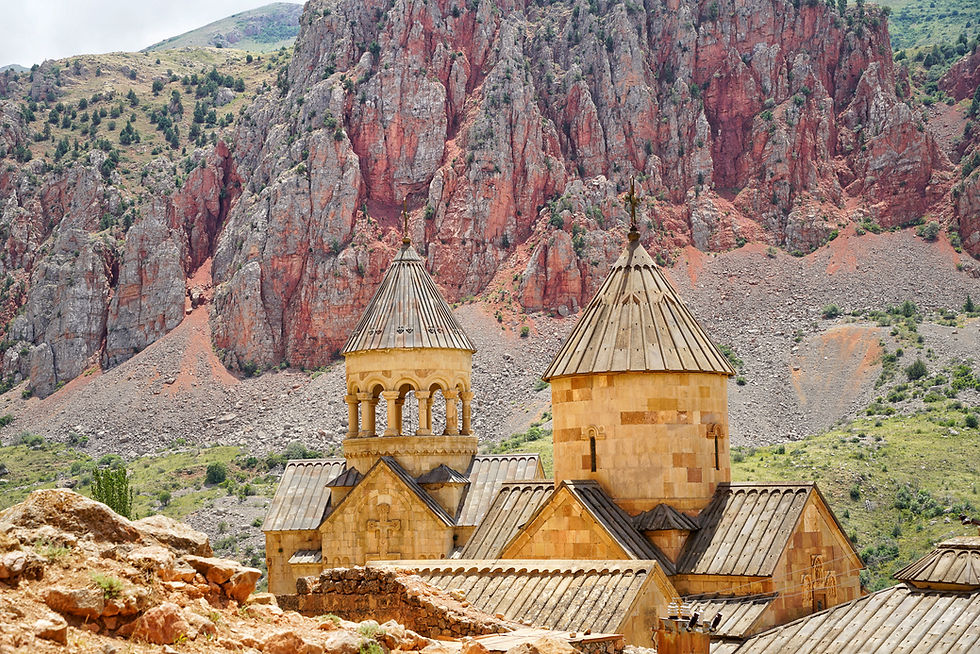
An Azerbaijani organization advocating for the return of Azerbaijanis to Armenia has expanded its cultural heritage claims to Noravank, one of Armenia’s best-known medieval monasteries, describing the 13th-century complex as an ancient “Albanian-Christian” site.
The claim was published September 28 in an article attributed to Aziz Alakbarli, an Azerbaijani lawmaker who chairs the Western Azerbaijan Community. The organization uses the term “Western Azerbaijan” for much of present-day Armenia and campaigns for what it calls the right of Azerbaijanis displaced from Armenia to return.
In the article, Noravank is called the “Amaghu” or “Anabat” temple and described as an ancient Albanian-Christian religious site. It claims Armenians later gave the monastery its current name and describes the Orbelian dynasty, whose history is closely tied to Noravank, as being of Turkic origin.

Those claims stand in contrast to the historical record presented by UNESCO and Armenian scholarship.
Noravank sits in the Amaghu Valley in Armenia’s Vayots Dzor province. UNESCO, which has included the monastery and surrounding valley on Armenia’s tentative World Heritage list since 1995, dates its monastic buildings to the 13th century and highlights structures designed by Momik, the medieval Armenian architect, sculptor and manuscript artist.
The latest claim is part of a broader Azerbaijani effort focused on Christian monuments within Armenia.
On September 22, the Western Azerbaijan Community announced that it had formed a working group to study what it calls “Albanian Christian heritage” across present-day Armenia. Azerbaijani news agencies APA, Trend and Report all carried the announcement.
The group said it plans to examine churches, chapels, cross-stones and monasteries through archival documents, inscriptions and architectural research. Its geographic focus includes areas it calls “Zangezur,” “Daralayaz” and the “Goycha Lake basin” — corresponding largely to Armenia’s Syunik and Vayots Dzor provinces and the area around Lake Sevan.
The organization also directly linked the project to its campaign for the return of Azerbaijanis to Armenia, saying the research would help document the historical and cultural basis for that effort. It cited a recent Azerbaijani-organized visit by foreign diplomats to Gandzasar Monastery in Nagorno-Karabakh as evidence that cultural heritage had entered the diplomatic agenda.
The campaign comes alongside statements from Azerbaijani lawmakers about monuments inside Armenia.
Fazil Mustafa, chairman of the Azerbaijani parliament’s Committee on Public Associations and Religious Organizations, said September 17 that Baku could eventually propose initiatives involving mosques and other historical and religious monuments in Armenia.
Mustafa said such work could take place after a peace agreement between Armenia and Azerbaijan, adding that Azerbaijan was prepared to put forward initiatives to restore monuments on the territory of present-day Armenia if an opportunity arose.
Hamlet Petrosyan, an archaeologist and head of the Department of Cultural Studies at Yerevan State University, rejected the Azerbaijani narrative and called on Armenian authorities to respond publicly to the growing heritage claims.
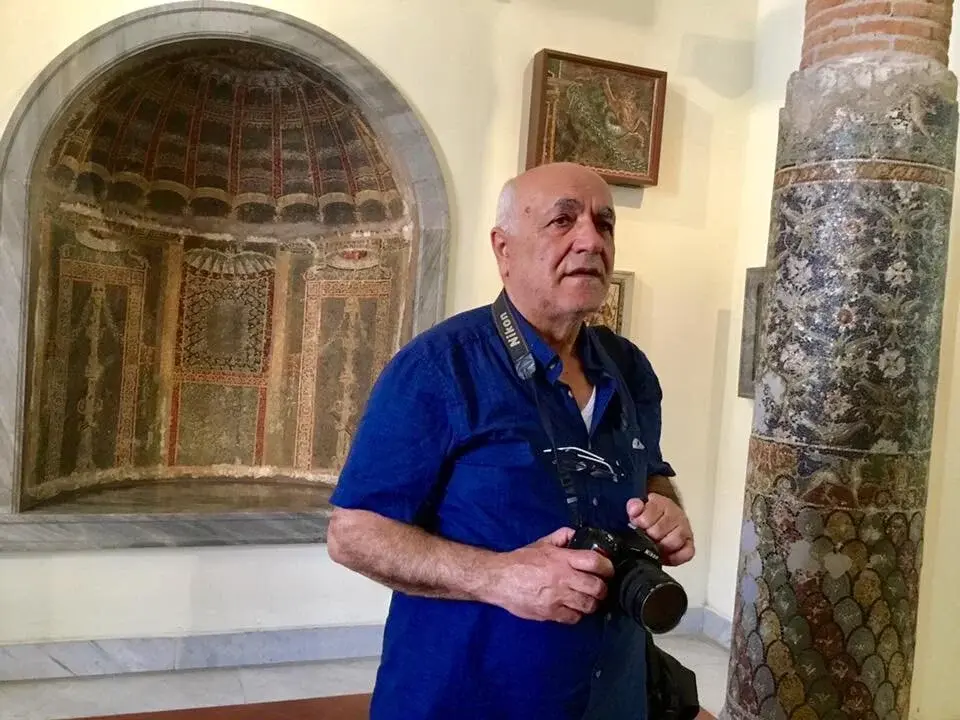
“Peace does not mean the illegal appropriation of cultural heritage,” Petrosyan told the Armenian newspaper Aravot. “Peace does not mean making such statements, and peace does not mean appropriating someone else’s heritage.”
Petrosyan said references to the historic Catholicosate of Albania are being used to draw conclusions that are not supported by the surviving cultural record.
The Catholicosate did exist, and its ecclesiastical jurisdiction included Artsakh during parts of its history. But Petrosyan said that did not make the Armenian Christian population or its monuments ethnically Caucasian Albanian.
“The Catholicos of Albania, who sat at Gandzasar, was Armenian, knew only Armenian and wrote only in Armenian,” Petrosyan said. “Belonging to the Catholicosate of Albania absolutely does not mean belonging to Caucasian Albania.”
He pointed to the thousands of Armenian-language inscriptions preserved across the region as evidence of the communities that built and maintained its medieval Christian monuments.
“In a region where there are 8,000 Armenian inscriptions beginning from the fifth century, and almost nothing in other languages, what should we call that region and its people?” Petrosyan said.
The competing historical narratives have taken on greater significance as Armenia and Azerbaijan pursue normalization after decades of conflict over Nagorno-Karabakh.
For Armenia, the dispute is also tied to concerns over the future of Armenian Christian monuments in Nagorno-Karabakh following Azerbaijan’s takeover of the region in September 2023 and the subsequent departure of virtually its entire ethnic Armenian population.
The latest focus on Noravank is a further expansion of the dispute: rather than focusing solely on monuments in territories now controlled by Azerbaijan, Azerbaijani organizations and officials are increasingly making cultural and historical claims involving Christian sites located within the internationally recognized borders of Armenia.
—
Support independent reporting from the region by subscribing to The Armenian Report. Our team is funded solely by readers like you.


.png)
Comments