
Armenia’s Police and Firefighters Surprise Women in Yerevan With Flowers for International Women’s Day

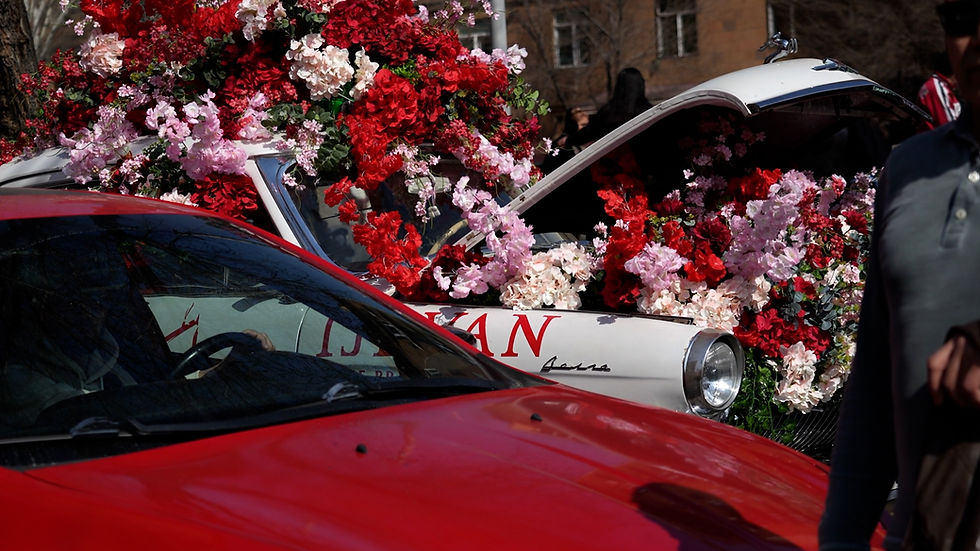
Armenia’s firefighters and police officers hit the streets on March 8 to surprise women across the capital, Yerevan, with flowers for International Women’s Day.
This year, The Armenian Report had a chance to ride along with the Patrol Service and the Fire Rescue Service, capturing the process as officers and rescuers delivered flowers to residents across the city. The gesture was part of a broader effort organized by Ministry of Internal Affairs of Armenia to congratulate women and recognize their role in society.
On the streets of Yerevan, patrol officers stopped vehicles driven by women, not for inspections or traffic checks, but to hand them flowers and wish them a happy holiday. Many drivers appeared surprised when officers approached their cars holding flowers instead of issuing instructions or checking documents.
International Women’s Day has a long history in Armenia that dates back more than a century. When women gained suffrage in Soviet Russia in 1917, March 8 became a national holiday there. In Armenia, the holiday was officially introduced in 1921 during the Soviet period.
Over time, the day became a well-established tradition across the country, celebrated by families, workplaces, and communities. Flowers, small gifts, and public events have become common ways to recognize women on the day.
After Armenia gained independence in 1991, there were discussions about removing March 8 from the official list of holidays. Some policymakers proposed replacing it with Day of Mothers and Beauty, celebrated on April 7.
However, March 8 had already become deeply rooted in Armenia’s culture and everyday life. The public continued to observe the day widely, and it remained part of the national holiday calendar.
International Women’s Day was originally associated with socialist and labor movements. For many years it was primarily celebrated in socialist and communist countries.
Beginning around 1967, the holiday was also embraced by the global feminist movement. Over time, it expanded beyond its early political roots and became recognized in many parts of the world.
Today, the meaning and style of the day varies by country. In some places it is a national holiday, while in others it receives little attention. In certain countries it serves as a day of protest and advocacy for women’s rights. In others, it focuses on celebrating women, family, and community.
—
Support independent reporting from the region by subscribing to The Armenian Report. Our team is funded solely by readers like you.


.png)
Comments