
POW Says Azerbaijan Blocks Armenian Detainees From Court Documents and Legal Representation

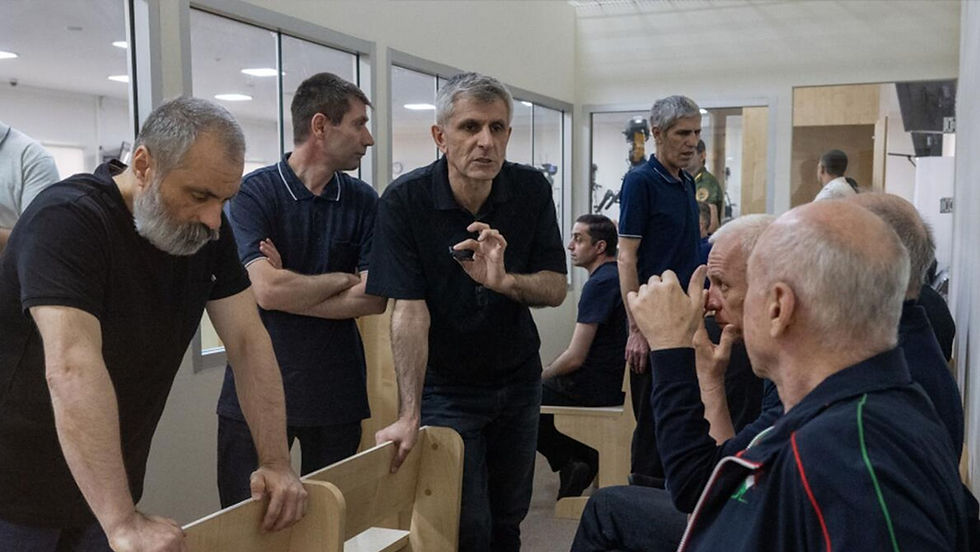
Davit Ishkhanyan, the former speaker of the Artsakh Parliament imprisoned in Azerbaijan, says Azerbaijani authorities have withheld court rulings from Armenian detainees and their lawyers, blocked efforts to authorize legal representation in Armenia and left prisoners with no practical way to contact the country’s human rights ombudswoman.
In a message from prison, Ishkhanyan challenged recent statements by Azerbaijan’s Human Rights Commissioner Sabina Aliyeva about the treatment of Armenians held in the country. He said Aliyeva had met with the prisoners three times in three years, but argued that the meetings had failed to resolve some of their most serious legal concerns.
The latest meeting took place May 5, according to Ishkhanyan. He said the prisoners gave Aliyeva detailed accounts of what they considered violations of their rights and international law and asked her to intervene.
Ishkhanyan acknowledged that Aliyeva had sent the prisoners coffee, tea, sweets and books, and thanked her for the gesture. But he said the central issues facing the detainees were legal, not related to their living conditions.
“Our problems are not about everyday living conditions,” he said. “Those are secondary.”
Among the issues Ishkhanyan raised was access to a Feb. 5 ruling by the Baku Military Court. He said he asked Aliyeva in writing and in person to help provide his family with a copy, either through his lawyer or Armenia’s human rights defender.
According to Ishkhanyan, defense lawyers had not received the ruling either.
He said Aliyeva told him she would try to have the Azerbaijani-language version delivered. More than four months later, Ishkhanyan said, neither he nor his family had received it.
“Do my family and relatives have the right to know what charges we are being tried on and what verdict has been handed down?” he asked.
Ishkhanyan also questioned why the ruling had not been made publicly available, saying the international community should be able to examine proceedings involving allegations as serious as crimes against humanity.
“The international community has the right to know who is being tried in Azerbaijan, for what, and how,” he said. “I would call it pure medievalism.”
Ishkhanyan said the prisoners were facing another unresolved legal obstacle dating to Aug. 22, 2025. He said he and other detainees had been unable to issue a power of attorney to a representative in Armenia who could act on their behalf there and internationally.
He said the matter was raised with Aliyeva during the May meeting and blamed Azerbaijani authorities for creating “artificial obstacles.” More than a year after the problem began, he said, it remained unresolved.
Ishkhanyan also said the detainees had not received an Aug. 6 ruling from the Baku Court of Appeal following what he described as a 14-minute hearing. Representatives of Aliyeva’s office were present at that hearing, he said.
He said he had requested the Azerbaijani-language ruling, meaning a delay could not be explained by the need to prepare an Armenian translation.
The prisoners have also had little access to their lawyers since the appeal hearing, Ishkhanyan said.
“Since the court hearing, we have neither seen our lawyers nor had anyone answer our questions,” he said.
He also questioned Aliyeva’s claim of accessibility, saying detainees could not reach her office through its hotline while held either at the State Security Service detention facility in Baku or at the prison where they are now being held.
“How accessible is Azerbaijan’s ombudswoman?” he asked. “To put it briefly: there is no way.”
Ishkhanyan then directed some of his strongest criticism at Armenian authorities, accusing them of failing to do enough to obtain documents from the Azerbaijani proceedings and protect the prisoners’ rights.
He said he appealed to Armenia’s Human Rights Defender on May 6 with several requests but saw “zero result.”
Ishkhanyan called on the Armenian ombudsperson to obtain the indictments and court rulings and provide them to the prisoners’ families. He also invited the official to travel to Azerbaijan and meet the Armenian detainees in person.

“Come and meet” the prisoners, Ishkhanyan said, arguing that the current state of Armenia-Azerbaijan relations should make such a visit possible.
He also urged the Armenian government to demand copies of the indictments, verdicts and other court documents and examine whether the cases contain allegations that go beyond the individual defendants and concern Armenia, Armenian statehood or the Armenian people more broadly.
Ishkhanyan rejected the cases against the Armenian defendants as fabricated and said they had challenged the accusations during the proceedings.
“This trial has turned into a complete fiasco for Azerbaijan’s judicial system,” he said.
He also accused Azerbaijani media covering the proceedings of being dependent and censored, arguing that their reports did not reflect what the defendants were saying in court.
Ishkhanyan ended his message with an appeal to Armenian officials over the 19 Armenians he said remain imprisoned in Azerbaijan.
“This is not merely a matter of our individual dignity,” he said. “It is a matter of the dignity of all of us — and especially yours.”
“Show some honor and stand up for us,” he added. “Stay strong, people.”
—
Support independent reporting from the region by subscribing to The Armenian Report. Our team is funded solely by readers like you.


.png)
Comments